















Note:
Aggiungi le secondary keyword quando aggiorni abbonamento a rankmath:
– sublingual cbd oil
– how to take cbd sublingually
– do you swallow cbd oil
– cbd oil oral
Placing CBD oil under tongue is one of the simplest ways to take sublingual CBD — a method designed to deliver cannabidiol directly to the bloodstream by partially bypassing the digestive system.
Whether you’re exploring CBD for the first time or refining your routine, this guide covers exactly how to take CBD oil under tongue, what the science actually shows about absorption, the best timing strategies, and how sublingual CBD compares with capsules, topicals, and vaping.
Key Takeaways
- What it is: placing a few drops of CBD oil under the tongue and holding them for 60–90 seconds before swallowing.
- Goal: partial absorption through the sublingual mucosa, reducing first-pass liver metabolism.
- Onset: users commonly report subjective effects within 15–30 minutes, though pharmacokinetic studies show peak plasma levels can occur later (up to 4 hours).
- Best timing: with or shortly after a meal containing dietary fats — food can significantly increase CBD absorption.
- Dosage: start low (10–25 mg), observe your response for at least a week, and adjust gradually.
What Is CBD Oil?
CBD oil is a natural extract from hemp plants. Its active ingredient, cannabidiol (CBD), interacts with your body’s endocannabinoid system (ECS) — a network of receptors and enzymes that helps regulate mood, pain, sleep, and immune response.
Unlike THC, CBD is not a psychoactive component of cannabis. It does not produce a “high,” which makes it suitable for daily use. The ECS plays a role in maintaining balance across many body systems, and CBD supports this process by interacting with CB1 and CB2 receptors found throughout the central nervous system and immune system.
CBD oil is extracted using methods like CO2 extraction for high purity. Depending on its composition, it falls into three categories:
| Type | Contains | THC | Best for |
|---|---|---|---|
| Full-spectrum | CBD + other cannabinoids + terpenes | Trace amounts (<0.3%) | Maximizing the “entourage effect“ |
| Broad-spectrum | CBD + other cannabinoids + terpenes | None | Entourage effect without THC |
| Isolate | Pure CBD only | None | Avoiding all other cannabinoids |
How the Endocannabinoid System Processes Sublingual CBD
To understand why CBD oil under tongue works the way it does, it helps to know how your body processes it. The pharmacokinetics of cannabidiol involve the endocannabinoid system — a biological signaling network where cannabinoid receptors, endocannabinoids like anandamide, and enzymes such as fatty acid amide hydrolase (FAAH) all work together to maintain balance.
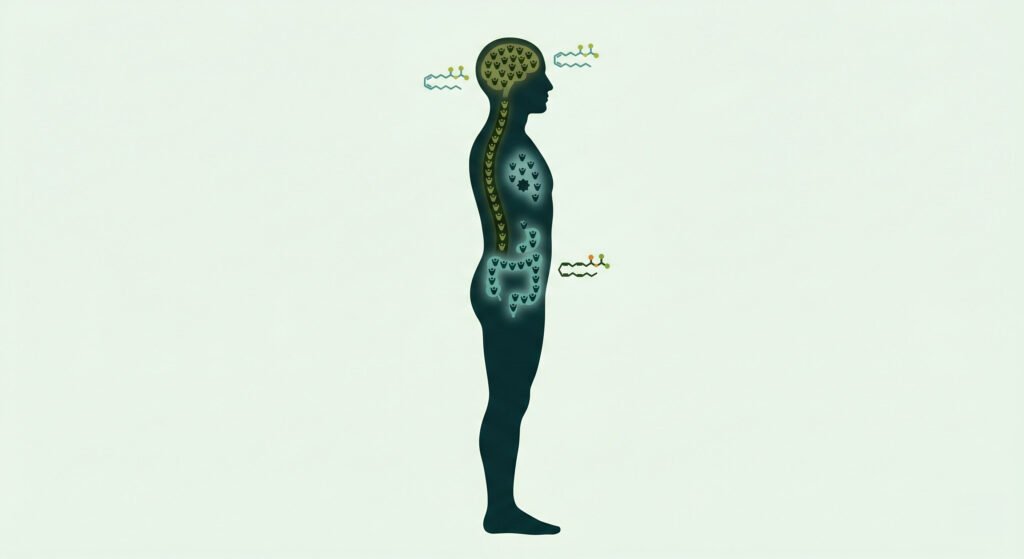
The ECS plays a role in regulating pain perception, stress response, inflammation, and sleep cycles. CB1 receptors are concentrated in the central nervous system, while CB2 receptors are more common in the immune system and peripheral tissues. When CBD enters the bloodstream, it becomes available to interact with both receptor types.
Sublingual administration is designed to let a portion of the CBD absorb through the mucous membranes under the tongue, partially bypassing the stomach and liver. During normal oral digestion, liver enzymes — including cytochrome P450 — break down a significant portion of the CBD before it reaches circulation. The sublingual route aims to reduce this first-pass effect for at least part of the dose.
Benefits of Taking CBD Oil Under the Tongue
The benefits of CBD oil under tongue center on convenience, dosing precision, and the pharmacokinetic potential of sublingual absorption. Here’s what the method actually offers — and what the science says.
Potential for Faster Onset
When you hold CBD oil under tongue for 60–90 seconds, a portion of the CBD can absorb through the thin mucous membranes directly into the blood vessels beneath your tongue. Many users report subjective effects within 15 to 30 minutes — significantly faster than the 1–2 hours typical of edibles.
That said, pharmacokinetic studies show peak plasma concentrations can occur later (up to 4 hours after administration). Subjective onset and peak blood levels don’t always coincide, and the exact timing depends on individual factors, formulation, and whether you’ve eaten.
Absorption Considerations
Sublingual administration is intended to let part of the CBD bypass first-pass liver metabolism. However, a 2023 randomized trial found that CBD oil delivered as sublingual drops and CBD oil swallowed in gelatin capsules produced similar plasma profiles — suggesting that much of sublingually-placed oil is actually swallowed before full mucosal absorption occurs.
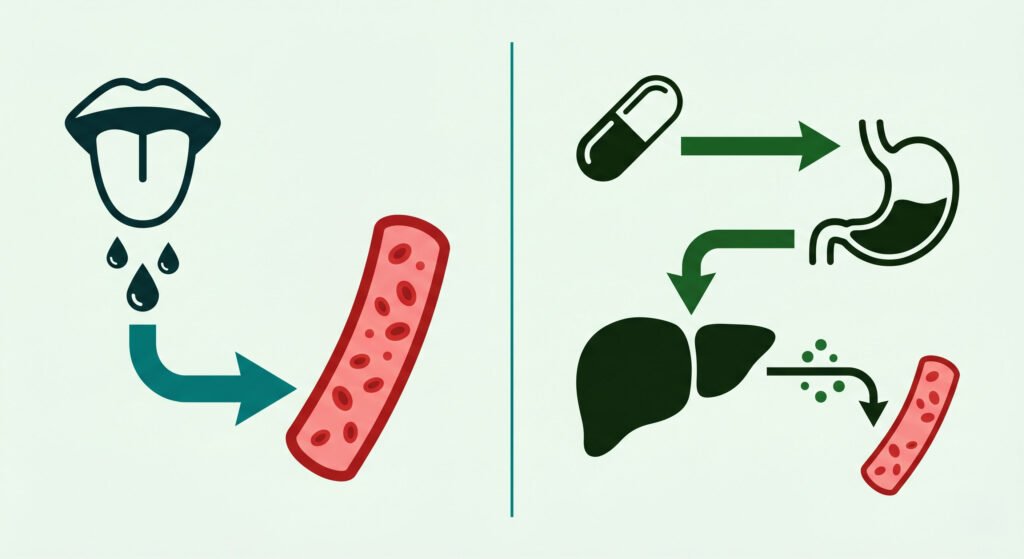
The practical takeaway: the sublingual technique matters. Holding the oil for the full 60–90 seconds (or longer if tolerable) increases the chance of mucosal absorption and may help reduce CBD loss to first-pass metabolism.
Convenience and Dosing Control
Beyond pharmacokinetics, sublingual CBD offers practical advantages. The dropper allows precise, incremental dosing — useful for finding your individual response. It’s discreet, requires no special equipment, and works well for people who want to avoid smoking or vaping. For those managing anxiety, stress, or discomfort, the ability to dose consistently and observe effects over time is often more valuable than pure speed.
Best Time to Take CBD Oil Under Tongue
The best time to take CBD oil under tongue depends on your goals — and, importantly, on whether you take it with food.
Morning vs. Evening
Taking CBD oil under tongue in the morning may support calm focus and ease daytime tension. Evening use may promote relaxation and support better sleep quality. Consistency matters more than the exact hour: once you find a routine that works, stick with it so your body can maintain steady CBD levels.
Should You Take CBD Oil Under Tongue With or Without Food?
This is where pharmacokinetic evidence is clearest. A 2023 systematic review and meta-analysis found that the fed state significantly increases both peak concentration (Cmax) and total exposure (AUC) compared with fasting — often by several fold. Meals containing dietary fats are particularly effective because CBD is highly fat-soluble.
Practical implications:
- Fasting: onset may be slightly faster, but total absorbed dose is lower.
- With or shortly after a meal with fats: onset can be delayed, but total absorption is significantly higher and effects may last longer.
- Best practice: if consistent effect and maximum absorption matter most, take CBD oil under tongue with or just after a meal containing healthy fats (avocado, olive oil, nuts, full-fat dairy).
How to Take CBD Sublingually: Step-by-Step
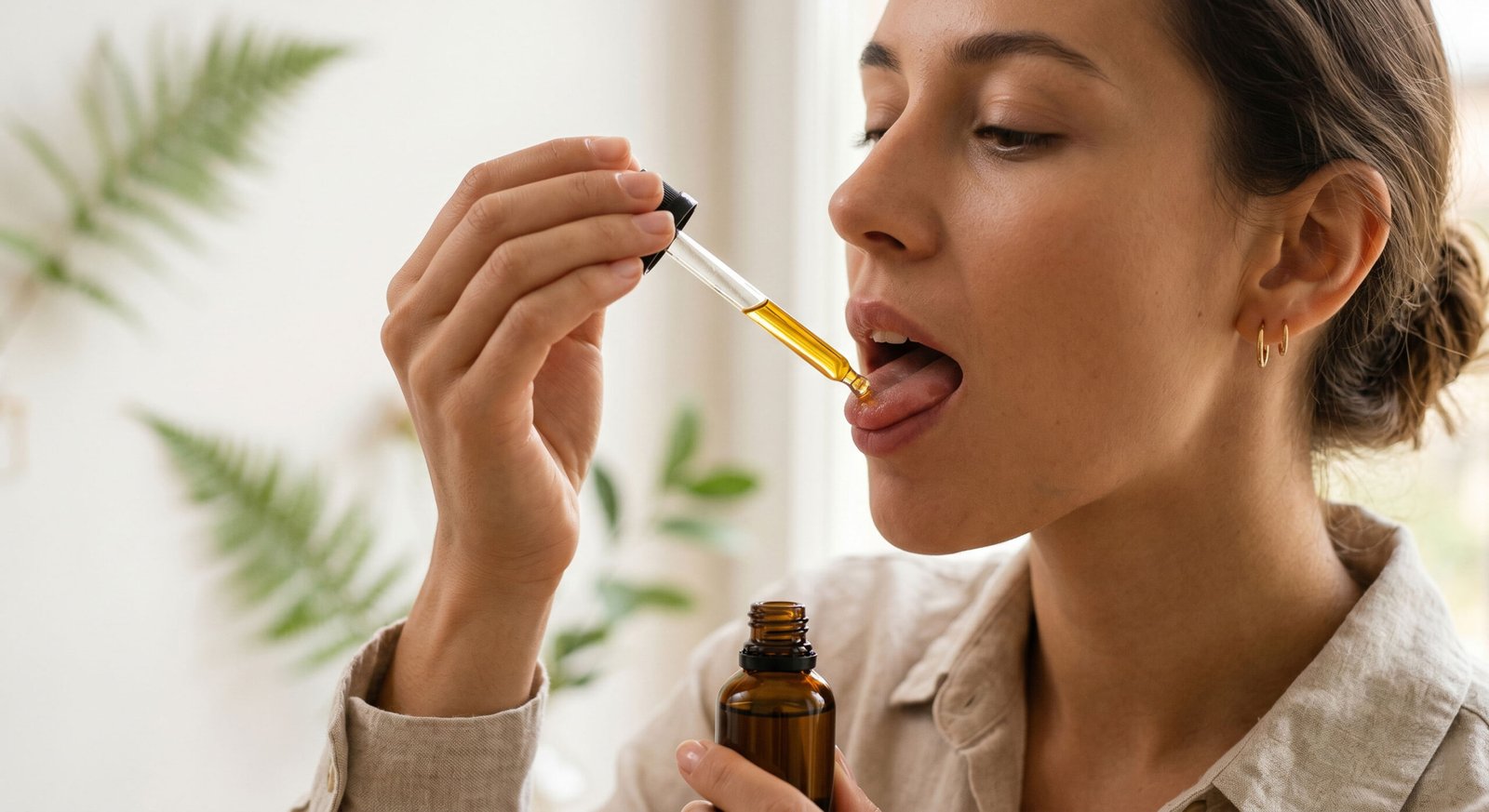
If you’re wondering how to take CBD sublingually, the process is simple. Here’s how to do it correctly:
- Measure your dose: use the dropper to draw the recommended amount of CBD oil based on the product’s concentration (mg/ml).
- Place the drops under your tongue: tilt your head slightly and squeeze the oil into the space beneath your tongue.
- Hold for 60–90 seconds (longer is better): keep the oil under your tongue without swallowing. Holding up to 2–3 minutes may increase mucosal absorption.
- Swallow the remaining oil: whatever wasn’t absorbed will still contribute via the oral route. Nothing goes to waste.
- Wait before eating or drinking: give it a few minutes before having water or food to avoid interfering with any mucosal absorption still occurring.
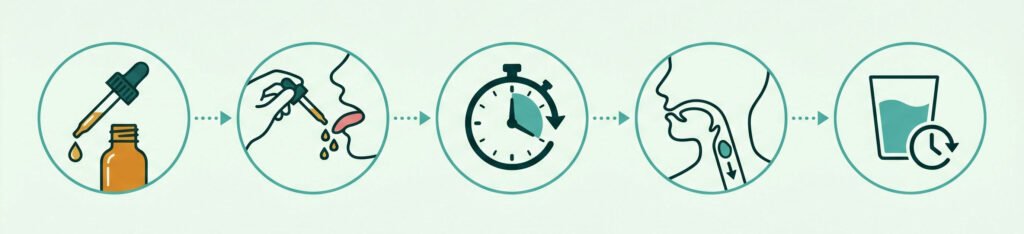
This sublingual CBD method takes less than two minutes once you’ve practiced. The key variable under your control is how long you hold the oil — the longer (within reason), the greater the chance of mucosal absorption.
Common Mistakes to Avoid
A few pitfalls can reduce the effectiveness of CBD sublingual drops:
- Swallowing too soon: holding for less than 60 seconds means most of the CBD follows the oral digestive route instead of being absorbed through the mucosa.
- Wrong placement: dropping the oil on top of the tongue or onto the cheek limits contact with the sublingual membranes.
- Inconsistent dosing: skipping days or changing amounts randomly makes it harder to gauge what works for you.
- Taking it always on an empty stomach: if maximum absorption is the goal, pairing with a meal containing fats is significantly more effective.
Do You Swallow CBD Oil After Holding It?
Yes — do you swallow CBD oil? Absolutely. After holding it under your tongue, swallow whatever remains. The swallowed portion follows the oral route and provides a secondary, slower wave of absorption. If the taste bothers you, flavored CBD sublingual drops are available, or you can drink water a couple of minutes after swallowing.
CBD Oil Under Tongue vs. Other Methods
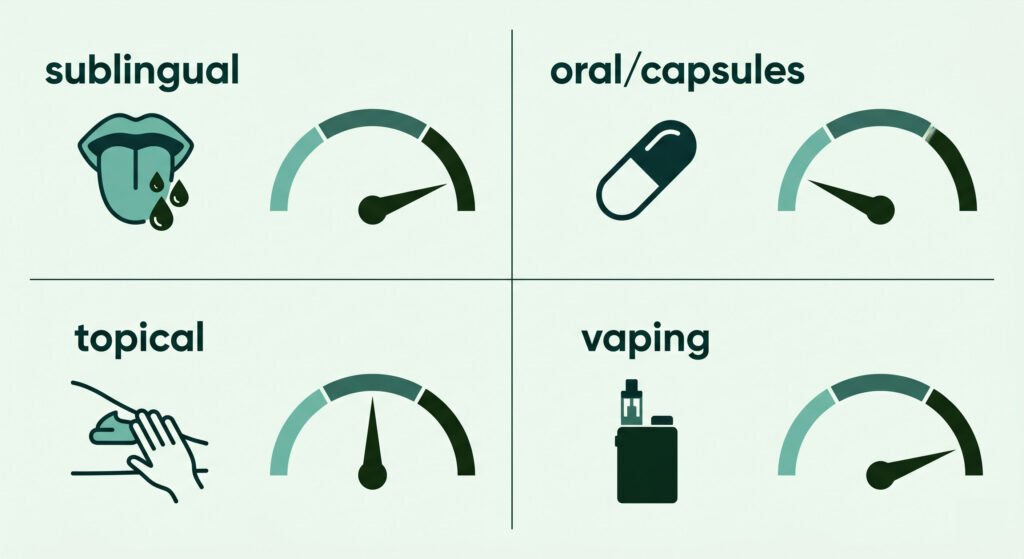
How does taking CBD oil under the tongue compare with other delivery methods? Each approach has trade-offs.
| Method | Typical onset | Duration | Best for |
|---|---|---|---|
| Sublingual (under tongue) | 15–30 min (subjective); peak plasma up to 4 h | 4–8 h | Daily wellness, dosing precision |
| Oral (capsules, edibles) | 60–120 min | 6–8 h | Steady, prolonged effect |
| Topical (creams, balms) | 15–30 min (localized) | 3–5 h (local) | Targeted joint/muscle relief |
| Vaping/inhalation | 2–10 min | 1–3 h | Rapid, short-term support |
Sublingual vs. Oral Ingestion (Capsules, Edibles)
CBD oil oral forms like capsules and gummies pass entirely through the digestive system. Onset is slower — often 60 to 120 minutes — but ingested forms can provide steadier, longer-lasting effects. Sublingual CBD aims for a partial mucosal bypass of digestion, which may shift the timing and absorption profile, though the practical difference from oral ingestion may be smaller than commonly claimed.
Sublingual vs. Topical Application
Topical CBD products — creams, balms, and patches — target specific areas of the body. They interact with cannabinoid receptors in the skin without entering the bloodstream in significant amounts, making them excellent for localized joint or muscle discomfort but ineffective for systemic effects. Sublingual CBD oil is the better option when you need whole-body support.
Sublingual vs. Vaping
Vaping delivers CBD through the lungs, producing effects within minutes — faster than sublingual. However, the effects tend to be shorter-lived. Vaping also involves device maintenance, a learning curve, and potential respiratory considerations. For most people seeking a balance of onset, duration, and safety, sublingual CBD oil is the more practical daily method.
Choosing the Right CBD Oil for Sublingual Use
Not every CBD oil is equally suited for sublingual use. When selecting a sublingual CBD oil, keep these factors in mind:
- Spectrum type: full-spectrum oils contain multiple cannabinoids and terpenes, which may work together synergistically (the “entourage effect”). Broad-spectrum removes THC while keeping other compounds. Isolate is pure CBD.
- Third-party lab testing: reputable brands provide certificates of analysis (COAs) showing exact cannabinoid content and confirming absence of contaminants.
- Carrier oil: MCT (coconut-derived) oil is common and supports CBD absorption. Hemp seed oil is another option with its own nutritional profile.
- Dosage and concentration: start with a low dose (10–25 mg) and increase gradually. Check the per-serving CBD content on the label, not just the total bottle content.
A Note on Drug Interactions
CBD is metabolized by liver enzymes (particularly CYP3A4 and CYP2C19) — the same pathways used by many medications. This creates potential for interactions with anticoagulants (like warfarin), certain antiepileptics (such as clobazam), immunosuppressants, and some antidepressants. Always consult a healthcare provider before starting CBD if you take prescription medications. Learn more about CBD drug interactions.
Frequently Asked Questions
Is it safe to take CBD oil under tongue every day?
Daily use of CBD oil under tongue is generally considered safe for most adults. Start with a low dose and monitor how your body responds. If you take prescription medications, consult a healthcare provider to check for potential interactions.
Why does CBD oil under tongue work faster than capsules?
Users often report feeling subjective effects from CBD oil under tongue within 15 to 30 minutes, compared with 1–2 hours for capsules. The sublingual route is designed to let part of the CBD absorb through mucous membranes directly into the bloodstream, partially bypassing first-pass liver metabolism. However, pharmacokinetic studies show peak plasma concentrations may be reached later (up to 4 hours), and subjective onset doesn’t always match peak blood levels.
How long should I hold CBD oil under my tongue?
Hold CBD oil under your tongue for at least 60 to 90 seconds. Holding longer — up to 2 to 3 minutes — may increase mucosal absorption. The longer you hold the oil (within reason), the greater the chance that part of the dose absorbs through the sublingual membranes rather than being swallowed and digested normally.
How many drops of CBD oil should I put under my tongue?
The number of drops depends on the product’s concentration (mg per ml). A common starting point is half a dropper — roughly 0.5 ml — once daily, delivering 10–25 mg of CBD. Check the label for the exact CBD content per serving, start low, and increase gradually over a week until you find what works for you.
How often can I take CBD oil under my tongue?
Most products recommend taking CBD oil under the tongue once or twice daily. Some people split their dose between morning and evening. Start with once a day, observe how your body responds over a week, and adjust from there. Consistency matters more than taking large amounts at once.
Can CBD oil under the tongue interact with medications?
Yes. CBD inhibits liver enzymes (particularly CYP3A4 and CYP2C19) that metabolize many common medications, including anticoagulants like warfarin, certain antiepileptics such as clobazam, some immunosuppressants, and specific antidepressants. The interaction can either increase or decrease the effect of those medications. Always consult a healthcare provider before starting CBD if you take prescription drugs.
References
- Millar SA, Stone NL, Yates AS, O’Sullivan SE. A Systematic Review on the Pharmacokinetics of Cannabidiol in Humans. Front Pharmacol. 2018 Nov 26;9:1365. doi: 10.3389/fphar.2018.01365. PMID: 30534073; PMCID: PMC6275223.
- Moazen-Zadeh E, Chisholm A, Bachi K, Hurd YL. Pharmacokinetics of Cannabidiol: A Systematic Review and Meta-Regression Analysis. Cannabis Cannabinoid Res. 2024;9(4):939-966. doi: 10.1089/can.2023.0025. PMID: 37643301; PMCID: PMC11397906.
- World Health Organization. Cannabidiol (CBD) Critical Review Report. Expert Committee on Drug Dependence, Fortieth Meeting, Geneva, 4-7 June 2018. Available at: who.int.