
















Your body contains a remarkable regulatory network that most people have never heard of—yet it influences nearly every aspect of your health. The endocannabinoid system (ECS) helps maintain balance in your mood, sleep, pain perception, immune response, and much more.
Understanding this system isn’t just fascinating science. It’s the key to understanding why cannabinoids like CBD interact with your body in the first place.
What Is the Endocannabinoid System?
The endocannabinoid system is a biological signaling network present throughout your entire body. Think of it as your body’s master regulator—constantly working behind the scenes to maintain internal balance, a state scientists call homeostasis {}.
When something in your body shifts out of its optimal range—whether that’s your temperature, stress levels, or inflammatory response—the ECS kicks in to help restore equilibrium.
This system isn’t unique to humans. Research indicates the ECS exists in all mammals and even many invertebrates, suggesting it evolved hundreds of millions of years ago as a fundamental survival mechanism.
What Does the Endocannabinoid System Do?
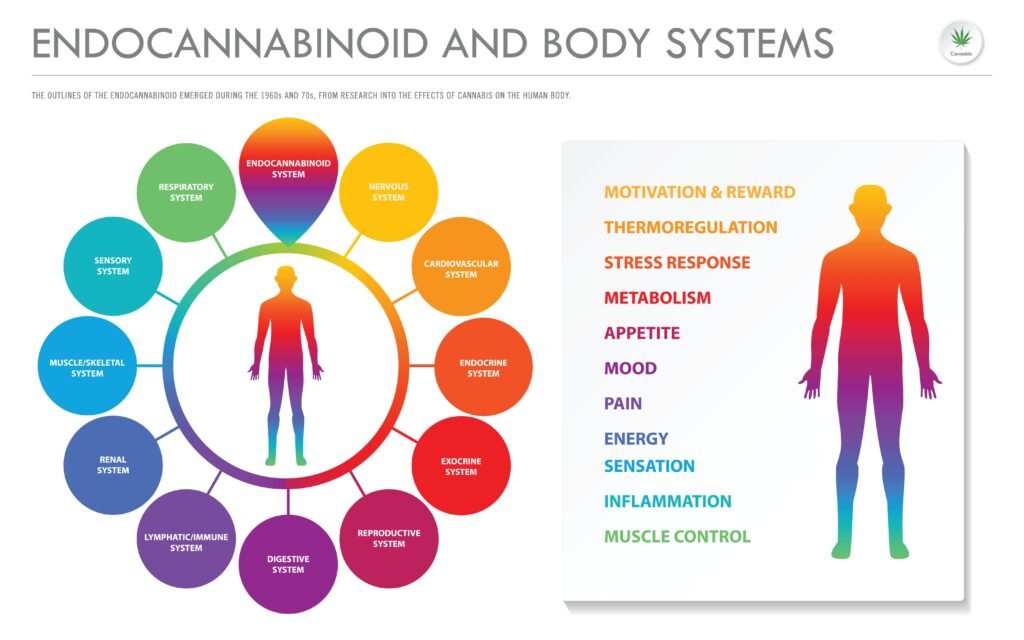
The ECS functions as a master regulator, helping maintain homeostasis—the body’s state of internal balance. When something throws off your equilibrium, whether it’s inflammation, stress, or pain, the ECS activates to help restore normal function.
Research indicates the ECS influences virtually every major physiological process:
Nervous System Functions:
- Pain perception and modulation
- Mood and emotional regulation
- Memory formation and processing
- Sleep-wake cycles
- Motor control and coordination
XXXX
A Brief History of ECS Discovery
The story of the endocannabinoid system begins with cannabis research. In 1964, Israeli scientist Raphael Mechoulam identified THC as the primary psychoactive compound in cannabis {<a href=”https://www.scirp.org/reference/referencespapers?referenceid=3701878” target=”_blank” rel=”noopener noreferrer”>Source</a>}. But this discovery raised a crucial question: why would the human body have receptors for a plant compound?
The answer came decades later. In 1990, researchers discovered the first cannabinoid receptor (CB1) in the brain {<a href=”https://www.nature.com/articles/346561a0” target=”_blank” rel=”noopener noreferrer”>Source</a>}. Three years later, a second receptor (CB2) was identified, primarily in immune tissues {<a href=”https://www.nature.com/articles/365061a0” target=”_blank” rel=”noopener noreferrer”>Source</a>}.
Then came the breakthrough: in 1992, researchers discovered that our bodies produce their own cannabinoid-like compounds. They named the first one anandamide, from the Sanskrit word for “bliss” {<a href=”https://www.science.org/doi/10.1126/science.1470919” target=”_blank” rel=”noopener noreferrer”>Source</a>}. A second compound, 2-AG, followed in 1995 {<a href=”https://www.sciencedirect.com/science/article/abs/pii/000629529500109D” target=”_blank” rel=”noopener noreferrer”>Source</a>}.
These discoveries revealed something remarkable: we don’t have receptors for cannabis—we have an entire internal system that cannabis happens to interact with.

Why Everyone Has an Endocannabinoid System
The ECS isn’t optional equipment. It’s present from before birth, playing essential roles in fetal development, and continues functioning throughout your entire life {<a href=”https://onlinelibrary.wiley.com/doi/10.1002/dev.21944” target=”_blank” rel=”noopener noreferrer”>Source</a>}.
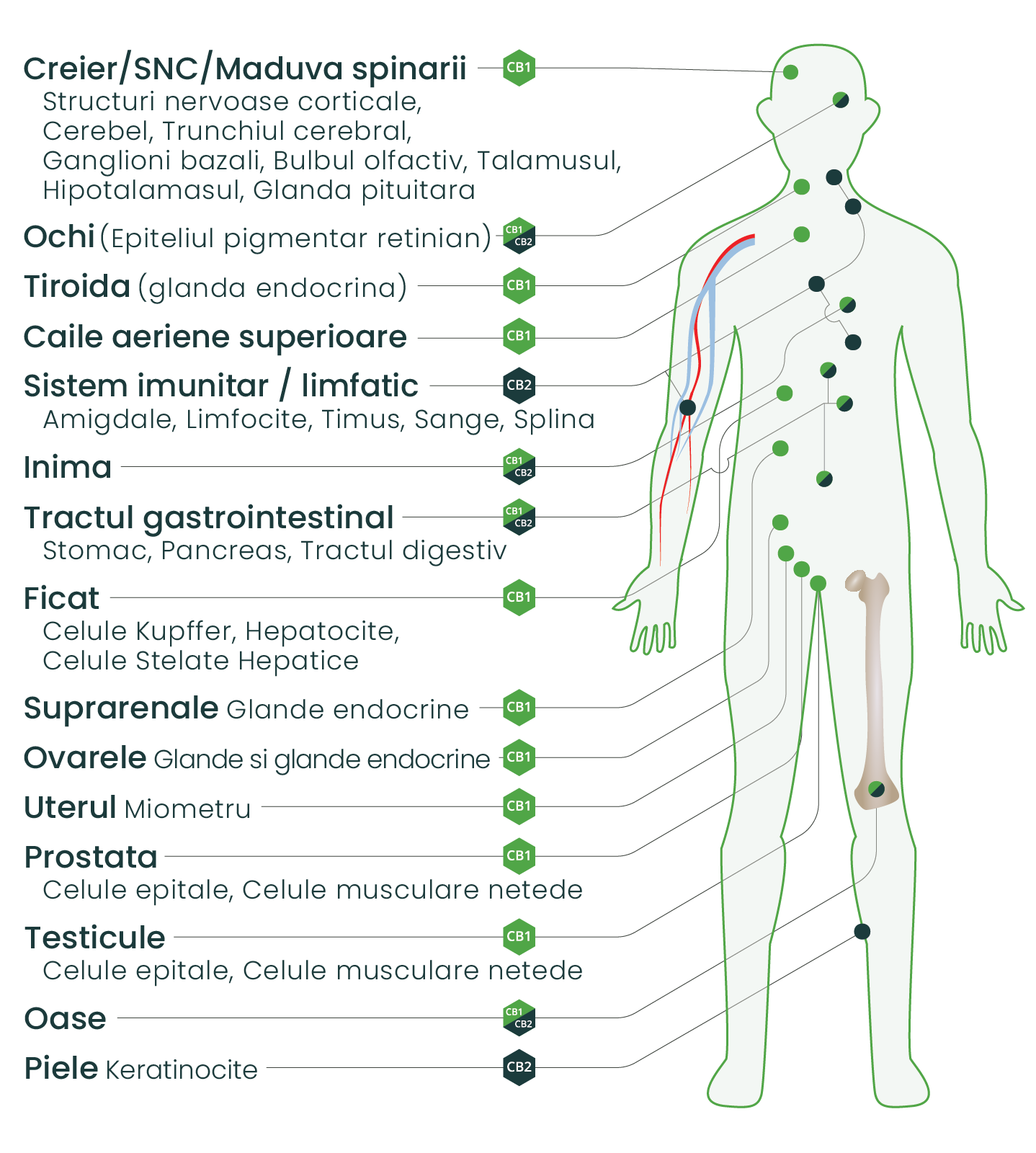
This system operates in virtually every organ and tissue type, including your brain, immune cells, gut, skin, heart, and reproductive organs. It’s involved in processes as diverse as forming memories, fighting inflammation, regulating appetite, and even managing how you respond to stress.
{IMMAGINE 2}
The Three Components of the Endocannabinoid System
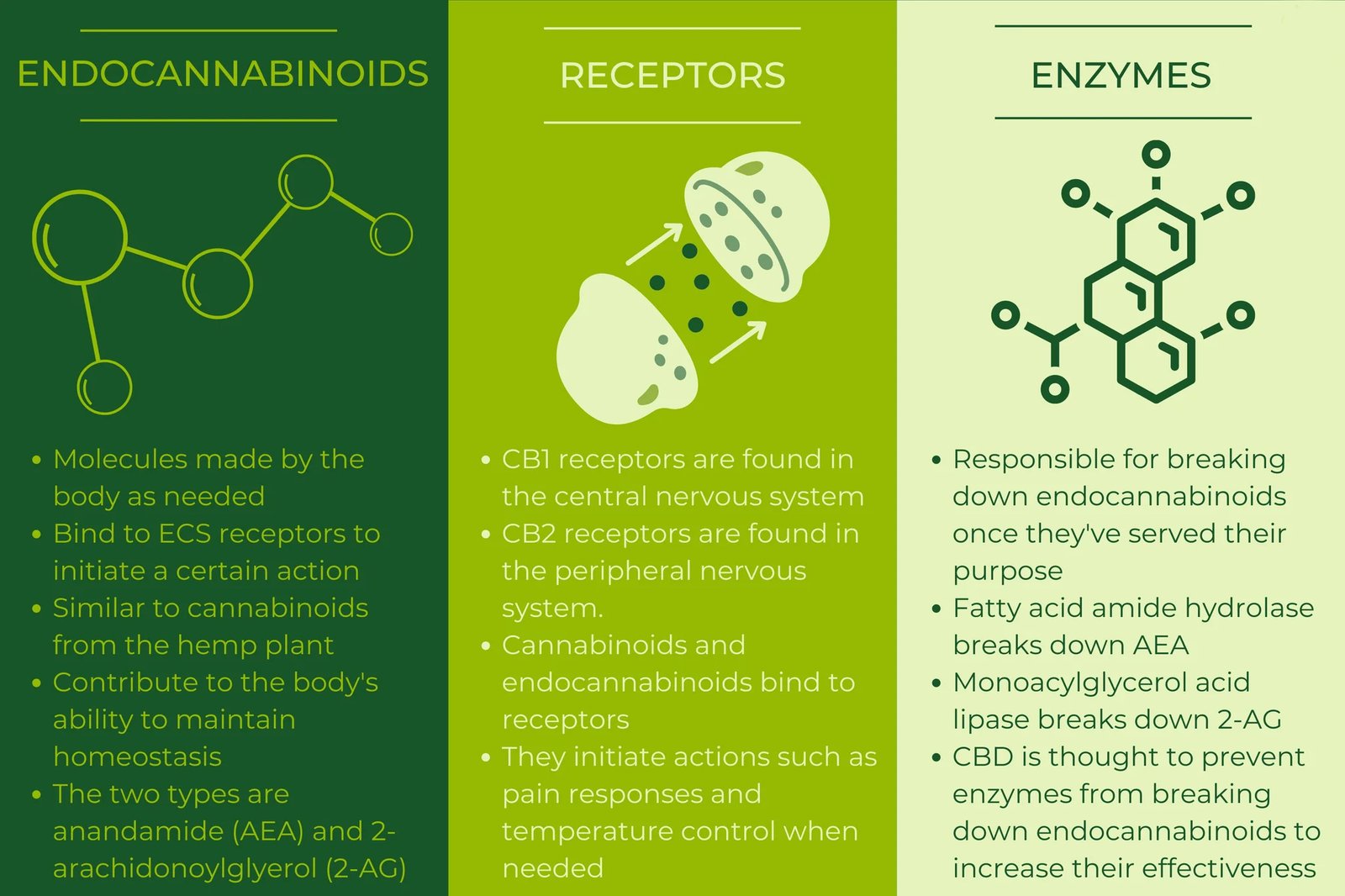
The ECS operates through three interconnected components working together in an elegant biological dance. Understanding these components helps explain how cannabinoids—both those your body makes and those from plants—produce their effects.
Endocannabinoids: Your Body’s Own Cannabinoids
Endocannabinoids are signaling molecules your body produces on demand. Unlike some neurotransmitters that are stored and released, endocannabinoids are created when and where they’re needed from fatty compounds in cell membranes {<a href=”https://journals.sagepub.com/doi/10.1177/0269881111405357” target=”_blank” rel=”noopener noreferrer”>Source</a>}.
The two primary endocannabinoids are:
Anandamide (AEA)
Often called the “bliss molecule,” anandamide plays key roles in mood regulation, pain modulation, and appetite. It was the first endocannabinoid discovered and is particularly important during brain development and stress response {<a href=”https://mitpress.mit.edu/9780262536608/cannabinoids-and-the-brain/” target=”_blank” rel=”noopener noreferrer”>Source</a>}.
2-Arachidonoylglycerol (2-AG)
Present in the brain at concentrations roughly 1,000 times higher than anandamide, 2-AG serves as the primary “workhorse” endocannabinoid. It’s essential for regulating neurotransmitter release and maintaining synaptic health {<a href=”https://www.mdpi.com/1422-0067/19/3/833” target=”_blank” rel=”noopener noreferrer”>Source</a>}.
These compounds share a key characteristic: they’re lipid-based (fat-soluble), which allows them to easily cross cell membranes and exert their effects quickly.
Cannabinoid Receptors: Where the Action Happens
Cannabinoid receptors are proteins embedded in cell membranes throughout your body. When endocannabinoids bind to these receptors, they trigger specific cellular responses—like a key fitting into a lock to open a door.
The two main cannabinoid receptors are:
CB1 Receptors
These are concentrated in your central nervous system, particularly in brain regions involved in memory, mood, motor control, and pain perception. CB1 receptors are among the most abundant receptor types in the human brain {<a href=”https://pmc.ncbi.nlm.nih.gov/articles/PMC4273654/” target=”_blank” rel=”noopener noreferrer”>Source</a>}. They’re also found throughout your body in organs, connective tissue, and the gut.
CB2 Receptors
Originally thought to exist only in immune tissues, CB2 receptors are now known to appear in the brain as well, though at lower concentrations than CB1. They’re particularly concentrated in immune cells and play crucial roles in regulating inflammation and immune responses {<a href=”https://www.sciencedirect.com/science/article/abs/pii/S0163782711000026” target=”_blank” rel=”noopener noreferrer”>Source</a>}.
Key Point: CB1 receptors are most abundant in the brain and nervous system, while CB2 receptors are concentrated in immune cells. However, both receptor types appear throughout the body in overlapping distributions.
Metabolic Enzymes: The Cleanup Crew
The third component ensures the ECS doesn’t stay activated indefinitely. Metabolic enzymes break down endocannabinoids after they’ve served their purpose, preventing excessive signaling and allowing the system to reset {<a href=”https://www.mdpi.com/1422-0067/19/3/833” target=”_blank” rel=”noopener noreferrer”>Source</a>}.
Two primary enzymes handle this task:
FAAH (Fatty Acid Amide Hydrolase)
Primarily responsible for breaking down anandamide into arachidonic acid and ethanolamine.
MAGL (Monoacylglycerol Lipase)
The main enzyme that degrades 2-AG, accounting for roughly 85% of its breakdown.
This enzymatic regulation is crucial. The rapid creation and destruction of endocannabinoids allows for precise, moment-to-moment adjustment of cellular signaling—exactly what you’d want from a system designed to maintain balance.
{IMMAGINE 3}
What Does the Endocannabinoid System Do?
The ECS influences an remarkably broad range of physiological processes. Research indicates it plays regulatory roles in mood, memory, pain, sleep, immune function, appetite, metabolism, and reproduction {<a href=”https://scholarsarchive.byu.edu/facpub/5060/” target=”_blank” rel=”noopener noreferrer”>Source</a>}.
Rather than directly causing these functions, the ECS acts as a modulator—fine-tuning other systems to maintain optimal balance.
The ECS and Mood Regulation
The endocannabinoid system is particularly well-positioned to influence emotional states. CB1 receptors are abundant in brain regions associated with mood, including the prefrontal cortex, amygdala, and hippocampus {<a href=”https://pmc.ncbi.nlm.nih.gov/articles/PMC4273654/” target=”_blank” rel=”noopener noreferrer”>Source</a>}.
Research suggests anandamide plays an important role in stress response and emotional regulation. Studies indicate that stress can deplete anandamide levels, and that maintaining healthy endocannabinoid tone may support emotional resilience {<a href=”https://onlinelibrary.wiley.com/doi/10.1002/dev.21944” target=”_blank” rel=”noopener noreferrer”>Source</a>}.
The ECS and Pain Perception
Cannabinoid receptors are present throughout pain pathways—from peripheral nerves that detect harmful stimuli to brain regions that process pain signals. This positioning allows the ECS to modulate pain at multiple points {<a href=”https://journals.physiology.org/doi/full/10.1152/physrev.00004.2003” target=”_blank” rel=”noopener noreferrer”>Source</a>}.
Notably, CB1 receptors appear about ten times more frequently in the brain than mu-opioid receptors (the targets of drugs like morphine), and these receptor systems can interact to influence pain perception {<a href=”https://mitpress.mit.edu/9780262536608/cannabinoids-and-the-brain/” target=”_blank” rel=”noopener noreferrer”>Source</a>}.
The ECS and Sleep
While the relationship between the ECS and sleep is still being explored, evidence suggests endocannabinoids influence sleep architecture and quality. Anandamide, in particular, appears to promote sleep when levels increase {<a href=”https://scholarsarchive.byu.edu/facpub/5060/” target=”_blank” rel=”noopener noreferrer”>Source</a>}.
The ECS interacts with other sleep-regulating systems, and its activity varies across the sleep-wake cycle, suggesting it plays a role in the natural rhythms that govern rest.
The ECS and Immune Function
CB2 receptors are particularly concentrated in immune cells, where they help regulate inflammatory responses. When activated, CB2 receptors generally promote anti-inflammatory effects and can modulate immune cell migration and activity {<a href=”https://www.sciencedirect.com/science/article/abs/pii/S0163782711000026” target=”_blank” rel=”noopener noreferrer”>Source</a>}.
This immune-modulating function has drawn significant research interest, as inflammation underlies many chronic health conditions.
{IMMAGINE 4}
How the Endocannabinoid System Works
The ECS operates through an elegant mechanism that’s quite different from many other signaling systems in your body. Understanding this mechanism helps explain both how endocannabinoids work and why plant cannabinoids can produce effects.
Retrograde Signaling: Working Backwards
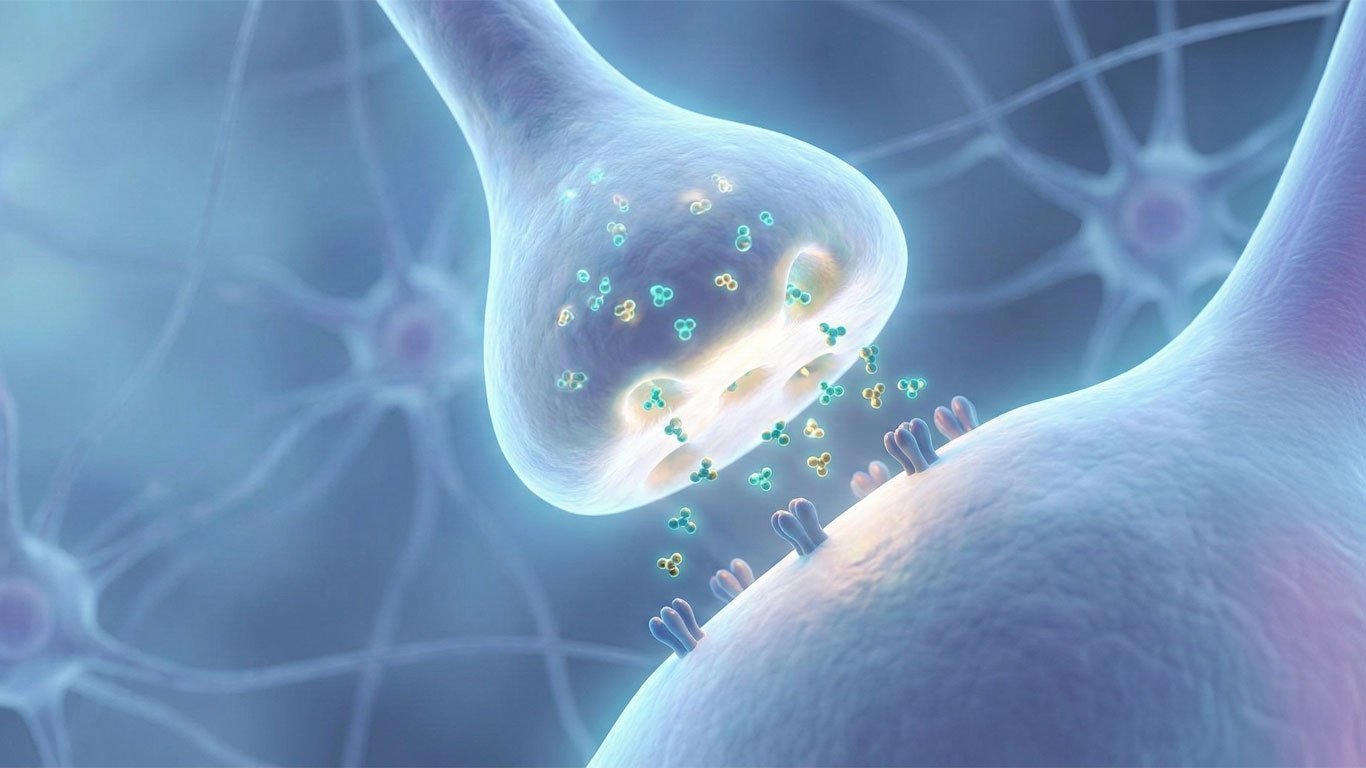
Most neurotransmitters travel in one direction—from the sending neuron (presynaptic) to the receiving neuron (postsynaptic). Endocannabinoids do something unusual: they travel backward {<a href=”https://mitpress.mit.edu/9780262536608/cannabinoids-and-the-brain/” target=”_blank” rel=”noopener noreferrer”>Source</a>}.
Here’s how it works:
- A postsynaptic neuron becomes highly activated
- This triggers rapid synthesis of endocannabinoids from membrane lipids
- The endocannabinoids travel backward across the synapse
- They bind to CB1 receptors on the presynaptic neuron
- This reduces the release of neurotransmitters, calming the signal
This retrograde signaling essentially creates a feedback loop. When neurons fire too much, the ECS tells them to ease up. It’s a built-in volume control for neural activity.
On-Demand Production
Unlike some signaling molecules that are stored in vesicles and released when needed, endocannabinoids are made on the spot from components already present in cell membranes. This “on-demand” synthesis allows for precise, localized responses {<a href=”https://journals.sagepub.com/doi/10.1177/0269881111405357” target=”_blank” rel=”noopener noreferrer”>Source</a>}.
The result is a system capable of highly targeted adjustments. Rather than flooding large areas with signals, the ECS can fine-tune activity at specific synapses and in specific tissues.
Maintaining Balance
The overall effect of ECS activity is homeostatic—it works to restore balance when systems become overactive or underactive. Whether the issue is excessive neural firing, inflammation, or other dysregulation, the ECS acts as a biological thermostat, working to return things to their optimal set point.
The Endocannabinoid System and CBD
This brings us to a crucial question: why do plant cannabinoids like CBD affect the human body?
The answer lies in what we’ve discussed. Plant cannabinoids (phytocannabinoids) interact with the same receptors and enzymes that your endocannabinoids use. They’re tapping into a system that already exists.
CBD’s relationship with the ECS is more subtle than THC’s. While THC directly activates CB1 receptors (producing psychoactive effects), CBD appears to work differently—influencing the ECS indirectly and interacting with other receptor systems as well {<a href=”https://bpspubs.onlinelibrary.wiley.com/doi/10.1038/sj.bjp.0707442” target=”_blank” rel=”noopener noreferrer”>Source</a>}.
Research suggests CBD may inhibit the FAAH enzyme that breaks down anandamide, potentially allowing your natural endocannabinoids to remain active longer {<a href=”https://www.who.int/publications/m/item/cannabidiol” target=”_blank” rel=”noopener noreferrer”>Source</a>}. This indirect approach may help explain why CBD doesn’t produce intoxication while still influencing the ECS.
The key insight is this: cannabinoids from plants aren’t introducing something foreign to your body. They’re interacting with a fundamental biological system you already possess.
{IMMAGINE 5}
Supporting Your Endocannabinoid System
Research is beginning to explore factors that may support healthy ECS function. While this area of science is still developing, several factors appear relevant.
The Role of Dietary Fats
Your endocannabinoids are built from fatty acids, making dietary fats important for ECS function. Research indicates that the balance between omega-6 and omega-3 fatty acids may be particularly significant {<a href=”https://www.nature.com/articles/nn.2736” target=”_blank” rel=”noopener noreferrer”>Source</a>}.
Studies suggest that diets very high in omega-6 relative to omega-3 (common in Western diets) may impair endocannabinoid signaling. Our ancestors evolved eating roughly equal amounts of these fats, while modern diets often contain 10-25 times more omega-6 than omega-3 {<a href=”https://www.sciencedirect.com/science/article/abs/pii/S0753332202002536” target=”_blank” rel=”noopener noreferrer”>Source</a>}.
Foods that may support a healthier omega balance include fatty fish, walnuts, flaxseeds, and hemp seeds—which contain omega-6 and omega-3 in a ratio close to the historical human diet.
Physical Activity
Exercise appears to boost endocannabinoid levels. Research has found that aerobic exercise increases circulating anandamide, which may contribute to the mood-elevating effects often called “runner’s high” {<a href=”https://pubmed.ncbi.nlm.nih.gov/15388533/” target=”_blank” rel=”noopener noreferrer”>Source</a>}.
Stress Management
Chronic stress appears to suppress ECS function, while the ECS itself helps regulate stress responses. This bidirectional relationship suggests that stress management may support healthy endocannabinoid tone {<a href=”https://onlinelibrary.wiley.com/doi/10.1002/dev.21944” target=”_blank” rel=”noopener noreferrer”>Source</a>}.
When the ECS Is Out of Balance
Researcher Ethan Russo has proposed that deficiencies in endocannabinoid function may contribute to certain difficult-to-treat conditions, including migraine, fibromyalgia, and irritable bowel syndrome {<a href=”https://www.liebertpub.com/doi/10.1089/can.2016.0009” target=”_blank” rel=”noopener noreferrer”>Source</a>}.
This “clinical endocannabinoid deficiency” theory remains an area of active research. While not yet definitively proven, it has gained support from findings including altered endocannabinoid levels in certain patient populations and genetic variations in ECS components associated with disease risk.
The theory provides an interesting framework for understanding why cannabinoids might offer benefits for conditions that haven’t responded well to other approaches.
Important Note: Research into ECS dysfunction is ongoing, and our understanding continues to evolve. Individual responses to any intervention vary, and consulting a healthcare provider is always recommended when addressing health concerns.
Frequently Asked Questions
Continue Learning:
- Understanding CB1 and CB2 Receptors — A deeper look at where cannabinoid receptors are found and what they do
- Endocannabinoid Deficiency: When Your ECS Is Out of Balance — Exploring what happens when the ECS doesn’t function optimally
- Diet and Your Endocannabinoid System — How what you eat affects ECS function
The information in this article is for educational purposes only and is not intended as medical advice. Research on the endocannabinoid system is ongoing, and our understanding continues to evolve. Always consult with a healthcare provider before making decisions about your health.