




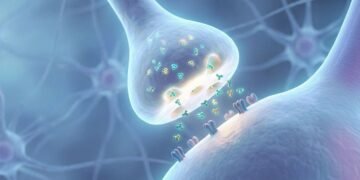














Have you ever felt perfectly in sync? Picture a day where your emotions stay calm, your body feels strong and light, and your thoughts are perfectly sharp. The reason you often feel so steady and in tune with yourself? That’s your endocannabinoid system. This vital internal network actively keeps everything inside your body operating perfectly.
Unfamiliar to many, this element profoundly influences the totality of your personal wellness. The endocannabinoid system is a master regulator, helping your body adapt to stress and stay healthy. It is one of the most important physiological systems involved in establishing and maintaining human health.
So, What Exactly Is the Endocannabinoid System?
Think of it as your body’s internal balancing act. Its main job is to maintain a stable internal environment , a state scientists call homeostasis. Your body works best when everything is within a narrow range, from your temperature and heart rate to your blood sugar and hormone levels.
The endocannabinoid system (ECS) is like the conductor of an orchestra, making sure all the different sections are in harmony. When something is out of tune—maybe you’re stressed, sick, or injured—this system steps in to bring things back to center. It sends out messages to adjust things like inflammation, anxiety, and pain .
It was discovered relatively recently, back in the early 1990s by researchers studying how THC affects the body. Scientists like Dr. Raphael Mechoulam uncovered this vast signaling network that was there all along. Their work revealed that our bodies create their own cannabis-like compounds, playing a vital role in our health.
The Three Main Players of the ECS
To understand how this system works, you need to know its three core components: endocannabinoids, cannabinoid receptors, and metabolic enzymes. These parts work together to create a seamless communication network throughout your body. Let’s break them down one by one.
1) Endocannabinoids: Your Body’s Own Cannabinoids
The “endo” part of the word means “within,” as in, made inside your body. Endocannabinoids are signaling molecules synthesized from fat-like molecules in our cell membranes. They are the messengers of the endocannabinoid system, produced on demand whenever they are needed.
The two most well-known endocannabinoids are anandamide and 2-arachidonoylglycerol (2-AG) . Anandamide is often called the “bliss molecule.” Its name comes from the Sanskrit word “ananda,” which means joy and delight, as it is associated with feelings of well-being and happiness.
2-AG is found in much higher concentrations in the brain and plays a big role in managing appetite, pain sensation, and immune functions. Your body makes these compounds exactly when and where they are needed to fix an imbalance. This localized production makes the system highly efficient.
2) Cannabinoid Receptors: The Locks on Your Cells
If endocannabinoids are the messages, then receptors are the mailboxes. These receptors sit on the surface of your cells, waiting for a message. When an endocannabinoid binds to a receptor, it sends a signal into the cell, telling it what to do.
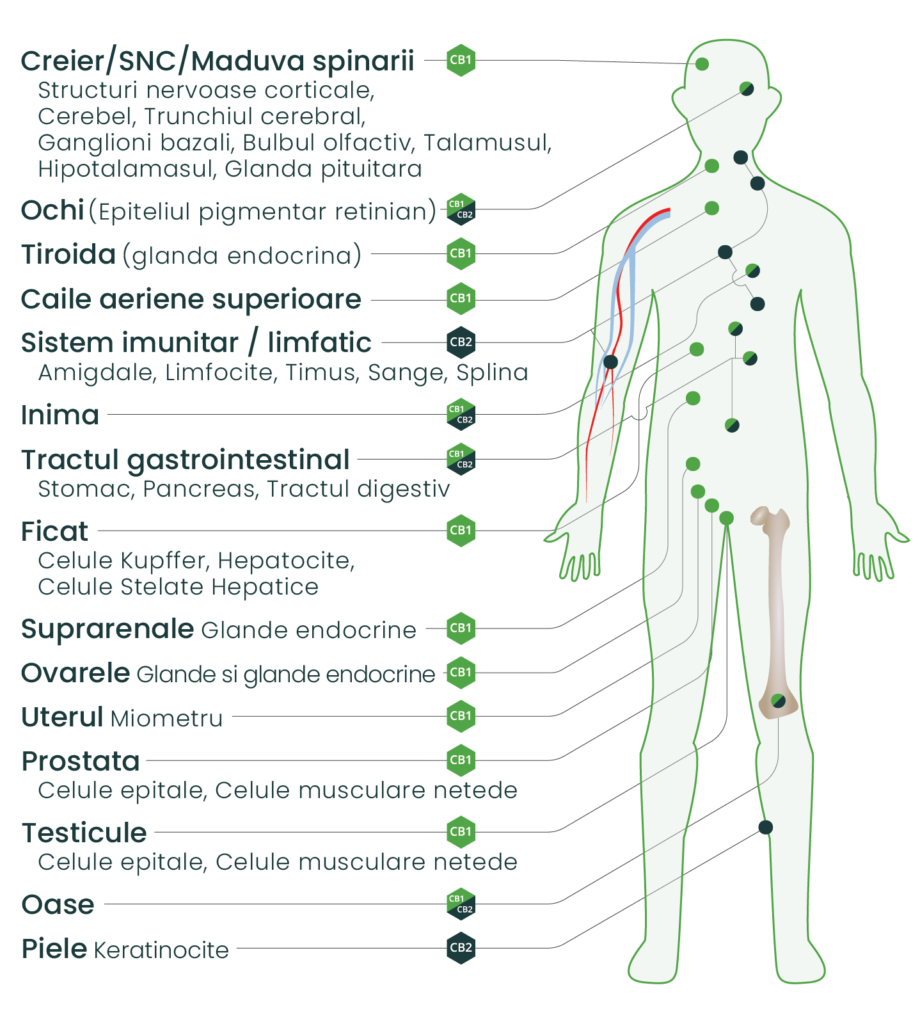
The two primary receptors are called Cannabinoid Receptor 1 (CB1) and Cannabinoid Receptor 2 (CB2). This relationship functions much like a lock and key. The endocannabinoid is the key, and the receptor is the lock that only the right key can open.
CB1 receptors are mostly found in your brain and central nervous system, with high concentrations in areas that control mood, memory, and pain. The high concentration of CB1 receptors throughout the brain highlights their importance in cognitive and emotional processes.
CB2 receptors are located mainly in your peripheral nervous system and on immune cells. When activated, they help manage inflammation and immune responses throughout your body.
Some researchers also point to GPR55 as a potential third cannabinoid receptor, though its role is still being studied. This demonstrates that there is still much to learn about this incredible system. The distribution of these receptors explains why cannabinoids can have such wide-ranging effects.
CB1 vs CB2 Cannabinoid Receptors
A comparative overview of the two main endocannabinoid receptors
| Feature | CB1 Receptors | CB2 Receptors |
|---|---|---|
| Primary Location |
🧠 CB1 Receptors
Central Nervous System
Brain and spinal cord
|
🛡️ CB2 Receptors
Immune System
Lymphoid organs and immune cells
|
| Main Functions |
🧠 CB1 Receptors
|
🛡️ CB2 Receptors
|
| Key Areas |
🧠 CB1 Receptors
Cerebral cortex, hippocampus, hypothalamus, basal ganglia, cerebellum, amygdala, spinal cord
|
🛡️ CB2 Receptors
Spleen, thymus, tonsils, bone marrow, T cells, B cells, macrophages, NK cells
|
| Peripheral Presence |
🧠 CB1 Receptors
Liver, adipose tissue, cardiovascular system, digestive tract, skin, reproductive organs, skeletal muscle
|
🛡️ CB2 Receptors
Brain (during inflammation), bones (osteoblasts, osteoclasts), liver (when damaged), digestive tract, skin
|
3) Metabolic Enzymes: The Cleanup Crew
Once an endocannabinoid has delivered its message, it needs to be cleared away. If it stuck around too long, the system would be constantly active, which could disrupt its delicate balance. That’s where metabolic enzymes come in.
These enzymes are the cleanup crew. Their job is to break down the endocannabinoids after they’ve been used. The two main enzymes are fatty acid amide hydrolase (FAAH), which breaks down anandamide, and monoacylglycerol lipase (MAGL), which degrades 2-AG.
This breakdown process is rapid and precise. It makes sure that endocannabinoids are only active for as long as they need to be. This is a critical part of keeping the entire endocannabinoid system finely tuned and responsive to your body’s immediate needs.
How Your Endocannabinoid System Keeps You Balanced
When an outside force, like stress or injury, throws your body off balance, the endocannabinoid system gets to work. It helps your body return to its ideal operating point. Here are just a few of the functions it helps to regulate:
- Mental and emotional functions in the brain and body. The ECS modulates neurotransmitter release in key brain regions, helping regulate emotional responses, cognitive processing, and psychological well-being. It influences how we perceive and react to emotional stimuli, contributing to overall mental stability.
- Everything from body movement. The ECS plays a crucial role in motor control and coordination by influencing neurotransmission in the basal ganglia and cerebellum. It helps fine-tune muscle movement, balance, and the smooth execution of voluntary motor actions
- Immune system function. Through CB2 receptors primarily found on immune cells, the ECS helps modulate immune responses , ensuring they are appropriate and proportional. It can both enhance immune function when needed and prevent excessive immune activation that could lead to autoimmune conditions.
- Mental health. The ECS is deeply involved in regulating mood disorders, anxiety, and depression by influencing serotonin and dopamine pathways. It helps maintain psychological resilience and emotional equilibrium, making it a critical component in mental health maintenance.
- Gut function. The ECS regulates gastrointestinal motility , secretion, and inflammation through receptors distributed throughout the digestive system. It influences everything from digestion and nutrient absorption to gut barrier integrity and the gut-brain communication axis.
- Brain protection. The ECS acts as a neuroprotective system , helping shield brain cells from damage caused by oxidative stress, inflammation, or trauma. It promotes neuronal survival and can help limit the extent of brain injury during pathological conditions.
- Mood and Stress Response. The ECS helps calm you down by regulating neurotransmitters that cause anxiety. By modulating your stress response, it is deeply involved in how you process fear and maintain emotional balance.
- Sleep. Your ECS influences your sleep-wake cycles. Research suggests it helps promote sleep initiation and stabilize sleep patterns, contributing to a more restful night.
- Appetite and Metabolism. The ECS is well-known for its role in hunger. Activating CB1 receptors can stimulate appetite, which is vital for getting energy when your body needs it.
- Pain Sensation. By acting on receptors in your brain and at the site of an injury, the ECS can help lower the perception of pain . This makes it a significant target for modern pain management therapies.
- Inflammation. A primary job of the CB2 receptors is to help control the immune system’s inflammatory response. This action prevents the immune system from overreacting and causing chronic inflammation.
- Memory. The ECS plays a part in memory processing. It sometimes helps you forget, a process called memory extinction, which is just as important as remembering for overcoming traumatic events.
- Reproductive Health. From fertility and ovulation to healthy pregnancy, the ECS is involved in many aspects of the reproductive system for both men and women.
This system acts with incredible precision. Our bodies make endocannabinoids exactly where they’re useful, then get rid of them fast. This localized, on-demand action lets your body make tiny adjustments without affecting your entire system.
What Happens When the ECS Is Out of Whack?
If this system is so important for balance, what happens when it’s not working properly? Some researchers believe that an underperforming endocannabinoid system might be at the root of certain health problems. This idea is called Clinical Endocannabinoid Deficiency (CECD).
The theory, first proposed by researcher Dr. Ethan Russo, suggests that if your body doesn’t produce enough endocannabinoids or has problems with its receptors, you might be more susceptible to certain illnesses. These conditions often involve sensitivity to pain and problems with mood and digestion.
Dr. Russo connected this theory to three specific conditions: migraines, fibromyalgia, and irritable bowel syndrome (IBS). He pointed out that all three share common patterns, such as heightened pain sensitivity and poor response to traditional treatments. His theory, detailed in a 2016 review on the topic, points to a potential common thread among these illnesses. The idea is still being explored, but it offers a fascinating look at how central this system is to our health.
Can You Support Your Endocannabinoid System?
Knowing all this, you might be wondering what you can do to help your endocannabinoid system function at its best. The good news is that you don’t need complicated treatments. Simple lifestyle choices can make a big difference.
Diet and Nutrition
What you eat can directly impact your ECS. Your body makes endocannabinoids from fatty acids. Specifically, it needs a healthy balance of omega-3 and omega-6 fatty acids to function correctly.
Most modern diets are too high in omega-6s and too low in omega-3s. You can help correct this imbalance by eating more foods rich in omega-3s. These include fatty fish like salmon and sardines, as well as plant-based sources like flaxseeds, chia seeds, walnuts, and hemp seeds.
Other foods can also lend a hand. Herbs and spices like black pepper, cloves, and rosemary contain a terpene called caryophyllene, which interacts directly with CB2 receptors. Dark chocolate contains compounds that can slow the breakdown of anandamide, allowing it to work for longer.
Exercise and Stress Management
Have you ever heard of a “runner’s high”? For a long time, people thought this feeling of euphoria came from endorphins. More recent science shows that endocannabinoids, especially anandamide, are likely responsible.
Moderate exercise is one of the best ways to increase your body’s production of anandamide. You don’t have to run a marathon to feel the benefits. Activities like jogging, cycling, swimming, dancing, or even brisk walking can do the trick. The key is consistent and enjoyable movement.
Chronic stress is a major enemy of the endocannabinoid system. Over time, high stress can reduce the number of cannabinoid receptors, making the system less effective. Practicing stress reduction techniques like yoga, meditation, and deep breathing can help protect your ECS and improve its tone.
The Role of Phytocannabinoids
Your body isn’t the only source of cannabinoids. Plants produce them too, and these are called phytocannabinoids. The most famous phytocannabinoids come from the cannabis plant, but they exist in other plants as well.

Tetrahydrocannabinol (THC) is known for its psychoactive effects. It works by binding directly to CB1 receptors in the brain, much like an endocannabinoid would. This direct action is what produces the “high” associated with marijuana.
Cannabidiol, or CBD, is another well-known phytocannabinoid from hemp that interacts with the ECS differently. Instead of binding directly to CB1 or CB2 receptors, CBD works more indirectly. One of its main actions is to inhibit the FAAH enzyme, which breaks down anandamide. By slowing FAAH, CBD can help increase anandamide levels, letting your body’s “bliss molecule” stick around longer and have a greater effect.
Conclusion
Your endocannabinoid system is a quiet but powerful force for your health. It is constantly working behind the scenes, helping you adapt, recover, and stay in balance. From your mood and sleep to your immune response, its influence is everywhere.
Understanding this system gives you a new appreciation for how interconnected your body truly is. You can actively help this vital network by making conscious choices about your diet, exercise, and stress levels. Simple changes can improve your ECS tone and support its mission to maintain homeostasis.
Taking care of your endocannabinoid system is one of the most basic ways to take care of your overall well-being. By nurturing this internal regulator, you are helping your body perform at its best every day. This leads to greater resilience and a better quality of life.
The Review
PROS
- Good low light camera
- Water resistant
- Double the internal capacity
CONS
- Lacks clear upgrades
- Same design used for last three phones
- Battery life unimpressive