














That Silent Companion We All Know
Have you ever felt your heart race before a presentation, even though you’ve prepared for weeks? Or found yourself lying awake at 3 AM, mind spinning with worries that seem ridiculous in daylight? You’re not imagining things, and you’re certainly not alone.
Anxiety is perhaps the most democratic of human experiences – it touches everyone, regardless of age, background, or life circumstances. But there’s a crucial difference between the everyday nervousness we all feel and anxiety that becomes a constant, unwelcome companion.
When Normal Worry Becomes Something More
The American Psychological Association defines anxiety as “an emotion characterized by feelings of tension, worried thoughts, and physical changes like increased blood pressure”¹. We’ve all been there. That flutter before a job interview? Completely normal. The knot in your stomach before a first date? Expected.

But what happens when these feelings don’t fade after the event? What if they appear without any clear trigger, or become so intense they stop you from living your life?
This is where everyday anxiety crosses into anxiety disorder territory – and it’s far more common than you might think. Around 14% of Australians experience an anxiety disorder each year², while in the United States, approximately 19% of adults have dealt with an anxiety disorder in the past year³. That’s nearly one in five people.
If you’re reading this and recognizing yourself, take a breath. You’re part of a vast community of people navigating the same challenges.
The Many Faces of Anxiety
Not all anxiety looks the same. In fact, anxiety disorders manifest in six distinct forms, each with its own characteristics:
- Generalized Anxiety Disorder (GAD) is perhaps what most people picture when they think of anxiety – persistent, excessive worry about daily life situations. Work, family, health – everything becomes a potential source of distress, even when there’s no apparent reason for concern.
- Social Anxiety Disorder (SAD) goes beyond simple shyness. It’s an intense fear of being judged or criticized by others, leading people to avoid social situations entirely. Imagine turning down a promotion because it means speaking in meetings, or missing your best friend’s wedding because the thought of being in a crowd triggers panic.
- Panic Disorder brings sudden, intense episodes of fear that peak within minutes – panic attacks. These can occur without warning, making sufferers live in constant fear of the next attack.
- Obsessive-Compulsive Disorder (OCD) involves recurring, intrusive thoughts (obsessions) and repetitive behaviors or mental rituals (compulsions) performed to temporarily ease anxiety. Despite popular misconceptions, it’s far more than just liking things tidy.
- Specific Phobias are extreme fears of particular objects or situations – spiders, heights, flying, enclosed spaces. While many people have mild aversions, phobias trigger intense anxiety that’s disproportionate to any actual danger.
- Agoraphobia is often misunderstood as simply “fear of open spaces,” but it’s actually anxiety about being in situations where escape might be difficult or help unavailable if panic strikes – crowds, public transport, or even leaving home⁴.
The Ripple Effect
Anxiety rarely travels alone. It frequently brings companions: depression, sleep disorders, and chronic pain often appear together in what clinicians call “comorbidity”⁵. In any given year, an estimated 10-20% of adults will visit their doctor during an anxiety or depressive episode, and more than half will be dealing with more than one condition⁶.
This overlap creates a complex web. Anxiety can disrupt sleep, poor sleep worsens anxiety, and both can trigger or intensify pain. It’s a cycle that can feel impossible to break – especially when traditional treatments focus on individual symptoms rather than the whole picture.
The Hidden Cost
Beyond the personal suffering, anxiety disorders carry a heavy societal burden. They’re associated with greater chronic health issues, slower recovery from illness, increased recurrence rates, and greater difficulty functioning in daily life⁶. People with anxiety often use medical services more frequently, creating both personal and economic strain.
But here’s what the statistics don’t capture: the moments you’ve missed, the opportunities you’ve let pass, the version of yourself you haven’t been able to be. The job you didn’t apply for. The relationship you didn’t pursue. The trip you didn’t take.
You’re Not Broken
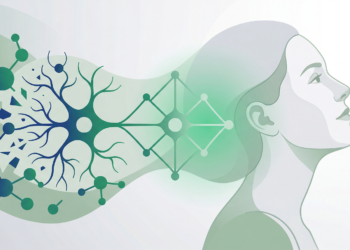
If you’re experiencing anxiety, here’s what’s important to understand: your brain isn’t defective. In fact, anxiety exists because your brain is doing exactly what evolution designed it to do – protect you from threats. The problem is that your threat-detection system has become overactive, seeing danger where none exists or responding disproportionately to minor stressors.
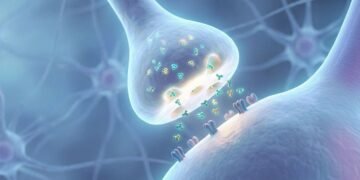
Research over the past two decades has revealed that anxiety involves complex interactions between several brain regions and chemical systems⁷. This isn’t a character flaw or a sign of weakness. It’s a biological condition with biological underpinnings – which means it can be addressed.
Beyond Traditional Approaches
For decades, the standard treatment protocol has been a combination of psychotherapy and pharmaceutical medications – typically benzodiazepines or SSRIs. And for many people, these approaches help. But they’re not universally effective, and they often come with significant side effects that can be as challenging as the anxiety itself⁸.
This is why there’s growing interest in alternative and complementary approaches – particularly those that work with your body’s own regulatory systems rather than simply suppressing symptoms. Natural compounds that have been part of traditional medicine for centuries are now being validated by modern science.
One such approach involves a component of the cannabis plant that doesn’t produce a “high” but may help restore balance to the systems that regulate anxiety. We’ll explore this in depth throughout this series, but for now, know this: you have more options than you might think.
Moving Forward
Living with anxiety can feel isolating, but you’re surrounded by millions of others navigating the same challenges. Understanding that anxiety is a recognized medical condition – not a personal failing – is often the first step toward reclaiming your life.
In the posts that follow, we’ll explore why traditional treatments don’t work for everyone, what’s actually happening in your brain and body when anxiety strikes, and what emerging research says about natural approaches that work with your biology rather than against it.
For now, if there’s one message to hold onto, it’s this: anxiety may be part of your experience, but it doesn’t have to define your life.
References:
- American Psychological Association. Anxiety. Available at: https://www.apa.org/topics/anxiety/
- Australian Psychological Society. Anxiety Disorders. Available at: https://www.psychology.org.au/for-the-public/Psychology-topics/Anxiety
- National Institute of Mental Health. Any Anxiety Disorder. 2017. Available at: https://www.nimh.nih.gov/health/statistics/any-anxiety-disorder.shtml
- American Psychiatric Association. Diagnostic and Statistical Manual of Mental Disorders (5th edition). Arlington: American Psychiatric Publishing; 2013.
- Hirschfeld RM. The comorbidity of major depression and anxiety disorders: recognition and management in primary care. Prim Care Companion J Clin Psychiatry. 2001;3(6):244–54 Aviable at: https://pmc.ncbi.nlm.nih.gov/articles/PMC181193/
- Arrow BA, Hunkeler EM, Blasey CM, et al. Comorbid depression, chronic pain and disability in primary care. Psychosom Med. 2006;68:262–8
- Kim MJ, Loucks RA, Palmer AL, et al. The structural and functional connectivity of the amygdala: From normal emotion to pathological anxiety. Behav Brain Res. 2011;23:403–10
- Fuentes D, Ray SD, Holstege CP. Anxiolytics. In: Wexler, editor. Encyclopedia of Toxicology. Third ed. Elsevier; 2014. p. 280–6