













Let’s address the elephant in the room immediately: when most people hear “cannabis,” they picture getting high. Bloodshot eyes, the munchies, impaired judgment – the stereotypical marijuana experience. So when someone suggests cannabis for anxiety, the first thought is often, “Are you serious? Cannabis makes anxiety worse!”
Here’s the fascinating truth: they’re both right and wrong. Cannabis contains over 540 different compounds¹, and while one of them (THC) does cause intoxication and can indeed worsen anxiety in some people, another (CBD) does the complete opposite – it may actually reduce anxiety without any intoxicating effects at all.
This distinction is crucial, and it’s why CBD has moved from the fringes of alternative medicine into mainstream acceptance across Europe and beyond.
The Tale of Two Molecules
THC (tetrahydrocannabinol) is cannabis’s famous compound – the one responsible for the “high.” It activates cannabinoid receptors in your brain in a way that produces euphoria, altered perception, and yes, sometimes increased anxiety or paranoia, especially at higher doses².
CBD (cannabidiol), on the other hand, interacts with your body’s systems in a completely different way. It doesn’t directly activate the same receptors that THC does. Instead, it works more subtly, modulating various systems to promote balance. Think of THC as loudly banging on a drum, while CBD is conducting an orchestra – same musicians (your biological systems), completely different result³.
This is why you can take CBD oil and drive to work, attend meetings, care for children, or operate machinery without any impairment. There’s no high, no euphoria, no altered state. Just… you, potentially with less anxiety.
Legal, Safe, and Increasingly Mainstream
Throughout Europe, CBD products derived from hemp (cannabis with less than 0.3% THC) are legal precisely because they don’t produce intoxication. You’re not buying something from a shadowy black market. You’re purchasing a botanical extract that’s increasingly recognized as a legitimate wellness compound.
This legal distinction exists for good reason. CBD has an excellent safety profile. The World Health Organization’s Expert Committee on Drug Dependence concluded that CBD “exhibits no effects indicative of any abuse or dependence potential” and “is generally well tolerated with a good safety profile”⁴.
You won’t become dependent on CBD. You won’t need increasingly higher doses to get the same effect. You won’t experience withdrawal symptoms if you stop taking it. These are fundamental differences from both recreational drugs and many prescription anxiety medications.
How CBD Actually Works
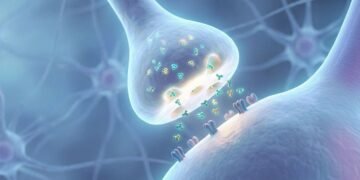
Here’s where it gets interesting. Your body already has a system specifically designed to maintain emotional balance, regulate stress responses, and modulate anxiety – it’s called the endocannabinoid system (ECS). Discovered only in the 1990s, this system was named after the cannabis plant because researchers found it while studying how cannabis affects the body⁵.
The ECS consists of:
- Receptors throughout your brain and body (CB1 and CB2 receptors)
- Naturally occurring compounds your body makes (endocannabinoids like anandamide)
- Enzymes that create and break down these compounds
When functioning properly, your ECS helps regulate anxiety, mood, sleep, pain sensation, immune response, and more. It’s like an internal balancing system, constantly making micro-adjustments to keep you in equilibrium⁶.
But chronic stress, poor sleep, inflammatory diets, and other modern lifestyle factors can throw this system off balance. Endocannabinoid deficiency – not producing enough of your own cannabinoids – may contribute to various conditions, including anxiety disorders⁷.
This is where CBD comes in. Rather than simply suppressing anxiety symptoms like conventional medications, CBD appears to support your ECS, helping it function more effectively. It’s not overriding your body’s systems; it’s helping them work as they’re designed to⁸.
Not All CBD is Created Equal: The Full Spectrum Difference
Walk into any health store or browse online, and you’ll find CBD products everywhere. Oils, capsules, gummies, creams – the variety is overwhelming. But here’s a critical distinction many people miss: the difference between CBD isolate and full spectrum CBD.
CBD Isolate is exactly what it sounds like – pure, isolated CBD with everything else removed. It’s 99% pure cannabidiol and nothing else. On paper, this sounds ideal. In reality, research suggests it’s significantly less effective.
Studies have found that CBD isolate follows a bell-shaped dose-response curve⁹. At low doses, it doesn’t work. At moderate doses, it’s effective. But at higher doses, it becomes less effective again. This creates a frustratingly narrow therapeutic window.
Full Spectrum CBD contains CBD along with the hundreds of other beneficial compounds naturally present in the hemp plant – other cannabinoids (like CBG, CBC, CBN), terpenes (aromatic compounds), and flavonoids. Together, these compounds work synergistically in what scientists call the “entourage effect”¹⁰.
Research comparing the two is revealing. One study found that full spectrum CBD produced a clear linear dose-response curve for reducing inflammation and pain – more dose, more effect. Meanwhile, CBD isolate showed that problematic bell-shaped curve⁹. In practical terms: full spectrum CBD was more effective at lower doses and maintained effectiveness as the dose increased.
Why does this matter? Because to get the same effect from CBD isolate, you might need 300-600mg, while full spectrum CBD can be effective at just 25-75mg¹¹. That’s a significant difference in both cost and practicality.
The Entourage Effect: Nature’s Wisdom
The entourage effect illustrates an important principle: sometimes nature’s complexity is more effective than pharmaceutical simplicity. Those additional compounds in full spectrum CBD aren’t just tagging along – they’re actively contributing to the therapeutic effect.
For example:
- Beta-caryophyllene (a terpene) activates CB2 receptors and has anti-anxiety properties on its own¹²
- Linalool (also found in lavender) has calming effects¹³
- Limonene (the citrus aroma compound) has been shown to reduce stress¹⁴
Together, these compounds work synergistically, each enhancing the others’ effects while potentially reducing any unwanted responses. It’s botanical teamwork at the molecular level.
Addressing the Fear Factor
If you’re hesitant about trying anything cannabis-related, that’s completely understandable. Decades of stigma don’t disappear overnight. But consider this: CBD is as different from the marijuana of popular imagination as coffee is from methamphetamine. Yes, they both come from plants and affect your nervous system, but that’s where the similarity ends.
You won’t fail a drug test from quality CBD products (tests look for THC, not CBD). You won’t experience impairment. You won’t get addicted. What you might experience is better emotional regulation, reduced anxiety symptoms, and improved sleep – without the side effects profile of conventional medications.
Quality Matters
Here’s the crucial caveat: not all CBD products deliver on their promises. The market is flooded with low-quality products containing less CBD than claimed, potentially harmful contaminants, or higher THC levels than legal limits allow.
This is why choosing CBD from reputable sources with third-party laboratory testing is essential. Certificates of Analysis (CoA) should verify the CBD content, confirm THC is below legal limits, and ensure the product is free from pesticides, heavy metals, and solvents.
Quality full spectrum CBD from verified sources represents a different category entirely from questionable products bought from gas stations or unvetted online sources.
A Natural Approach, Validated by Science
CBD represents something increasingly rare: a natural compound with both traditional use and modern scientific validation. It’s not a pharmaceutical pretending to be natural, nor is it wishful thinking masquerading as medicine. It’s a plant-derived compound that works with your body’s own regulatory systems, backed by growing research and clinical evidence.
In our next post, we’ll dive deeper into your body’s endocannabinoid system – how it manages anxiety, what goes wrong in anxiety disorders, and exactly how CBD might help restore balance. Understanding this biological foundation helps explain why CBD works so differently from conventional medications.
Want to learn more about choosing quality full spectrum CBD? Understanding what you’re looking for makes all the difference in finding effective products that deliver real results.
References:
- Cannabis has at least 540 secondary metabolites documented in scientific literature
- Parker LA. Cannabinoids and the Brain. Massachusetts: MIT Press; 2018
- Blessing EM, Steenkamp MM, Manzanares J, Marmar CR. Cannabidiol as a potential treatment for anxiety disorders. Neurotherapeutics. 2015;12:825–36. https://link.springer.com/article/10.1007/s13311-015-0387-1
- World Health Organization. Cannabidiol (CBD) Critical Review Report. Expert Committee on Drug Dependence. Geneva: WHO; 2018. https://www.who.int/publications/i/item/9789240025691
- Atkinson DL, Abbot JK. Cannabinoids and the brain: the effects of endogenous and exogenous cannabinoids on brain systems and function. In: Compton MT and Manseau MW (Eds). The Complex Connection Between Cannabis and Schizophrenia. Elsevier, 2017
- Hill MN, Patel S, Campolongo P, et al. Functional interactions between stress and the endocannabinoid system. J Neurosci. 2010;30(45):14980–6. https://pubmed.ncbi.nlm.nih.gov/21068301/
- Bluett R, et al. Central anandamide deficiency predicts stress-induced anxiety: behavioral reversal through endocannabinoid augmentation. Transl Psychiatry. 2014;4:e408. https://www.nature.com/articles/tp201453
- Campos AC, Moreira FA, Gomes FV, et al. Multiple mechanisms involved in the large-spectrum therapeutic potential of cannabidiol in psychiatric disorders. Philos Trans R Soc Lond Ser B Biol Sci. 2012;367(1607):3364–78. https://royalsocietypublishing.org/doi/10.1098/rstb.2011.0389
- Gallily R, Yekhtin Z, Hanuš LO. Overcoming the bell-shaped dose-response of cannabidiol by using cannabis extract enriched in cannabidiol. Pharmacol Pharm. 2015;6:75–85. https://www.scirp.org/journal/paperinformation.aspx?paperid=53912
- Russo EB. Taming THC: potential cannabis synergy and phytocannabinoid-terpenoid entourage effects. Br J Pharmacol. 2011;163:1344–64. https://bpspubs.onlinelibrary.wiley.com/doi/10.1111/j.1476-5381.2011.01238.x
- Shannon S, Lewis N, Lee H, Hughes S. Cannabidiol in anxiety and sleep: a large case series. Perm J. 2019;23:18–41. https://www.thepermanentejournal.org/doi/10.7812/TPP/18-041
- Bahi A, Al Mansouri S, Al Memari E, et al. β-Caryophyllene, a CB2 receptor agonist produces multiple behavioral changes relevant to anxiety and depression in mice. Physiol Behav. 2014;135:119–24. https://pubmed.ncbi.nlm.nih.gov/25046738/
- Cheng B-H, Sheen L-Y, Chang S-T. Evaluation of anxiolytic potency of essential oil and S-(+)-linalool from Cinnamomum osmophloeum ct. linalool leaves in mice. J Tradit Complement Med. 2015;5(1):27–34. https://pmc.ncbi.nlm.nih.gov/articles/PMC4270662/
- Fukumoto S, Morishita A, Furutachi K, et al. Effect of flavour components in lemon essential oil on physical or psychological stress. Stress Health. 2008;24(1):3–12. https://onlinelibrary.wiley.com/doi/abs/10.1002/smi.1158